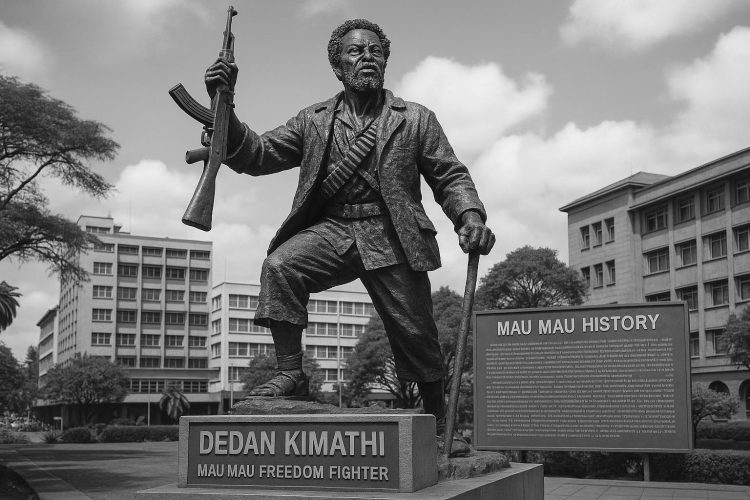
The Dedan Kimathi Statue
The Dedan Kimathi statue, located in the bustling city of Nairobi, Kenya, serves as a significant marker of Kenya’s colonial history and its quest for sovereignty. Unveiled on February 18, 2007, this statue stands in honor of one of the key figures of the Mau Mau Uprising against British colonial rule in the 1950s. More than a mere representation of a historical personality, this monument embodies the spirit of resistance, patriotism, and the struggles faced by a nation on its road to self-determination.
The Significance of Dedan Kimathi
Dedan Kimathi, born as Kimathi Waciuri on October 31, 1920, in central Kenya, emerged as a formidable figure in the collective memory of the Kenyan struggle for independence. Rising to prominence in the early 1950s, he became an influential leader of the Mau Mau movement, a group primarily constituted of the Kikuyu ethnic community. His leadership qualities and his unwavering commitment to his cause propelled him into the forefront of the struggle against colonial tyranny. By organizing guerrilla warfare strategies, Kimathi sought to reclaim the rights and land of the native people from the grips of British colonial rule.
Despite his ultimate capture and subsequent execution by the colonial government on February 18, 1957, Dedan Kimathi’s legacy has been enduring. The secrecy surrounding his final resting place adds an air of mystique, further cementing his status as a legendary figure within Kenyan history. For those interested in delving deeper into his life and achievements, the Kenya Mojo website offers additional insights.
The Mau Mau Uprising
In the timeline of Kenya’s historical evolution, the Mau Mau Uprising remains a defining moment. Taking place between 1952 and 1960, it was marked by intense and often violent confrontations between Mau Mau insurgents and British colonial forces. The colonial administration, determined to retain control, declared a state of emergency and responded with overwhelming military power.
The official narratives of the time often underplayed the atrocities committed during this period. Thousands of Mau Mau fighters are believed to have perished, with many more detained under harsh conditions in prison camps. The British administration’s efforts to extinguish the rebellion were marked by accusations of human rights abuses, revealing the harsh realities of colonial suppression.
Aftermath and Legacy
The repercussions of the Mau Mau Uprising were far-reaching. The prolonged conflict, combined with international scrutiny, set Kenya on an irreversible path towards independence, ultimately achieved on December 12, 1963. Although initially depicted by the colonial regime as anarchists and insurgents, the global and domestic perspective on the Mau Mau fighters gradually shifted. They are now celebrated as trailblazers in Kenya’s struggle for liberation, recognized for their pivotal contributions despite the colonial attempts to brand them otherwise.
The Dedan Kimathi statue stands as a beacon of these complex narratives. It compels contemporary viewers to reflect on the intricate dynamics of interpreting historical events and forces a reassessment of colonial-era portrayals of resistance movements. The statue challenges former colonial narratives, reinforcing the invaluable role of the Mau Mau in Kenya’s historical consciousness.
Conclusion
The Dedan Kimathi statue transcends its physical form, encapsulating an essential chapter in Kenya’s arduous journey towards independence. It immortalizes not only the individual heroism of Dedan Kimathi but also the tenacity and determination of the Mau Mau warriors. As a symbol, the statue represents the unyielding spirit of Kenya’s populace, a nation that courageously faced and overcame colonial oppression to forge its own destiny. For those eager to explore the contextual backdrop of Kenya’s independence, additional resources can be accessed through the Nation Africa website. Through such engagements, the narratives surrounding Kenya’s colonial history and its eventual sovereignty are better appreciated and understood.