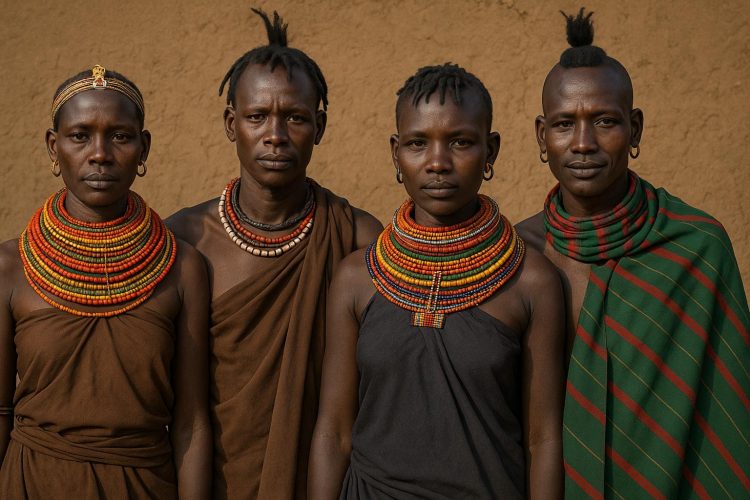
Pokot and Turkana Tribes: An Overview
The Pokot and Turkana stand out as significant ethnic communities within Kenya, offering a rich tapestry of cultural traditions that contribute to the country’s diverse social landscape. These groups have retained their cultural identities, even as modernization continues to spread across the region.
Geographical Location
The Pokot primarily inhabit the areas of West Pokot County and Baringo County. This region is known for its semi-arid climate, which greatly influences the lifestyle and economic activities of the Pokot. The harsh climatic conditions necessitate a reliance on pastoralism as a primary economic activity. This mode of living involves the raising of livestock, which is central to their survival and culture.
In contrast, the Turkana people are located in Turkana County, found in the northwestern part of Kenya. The region is characterized by arid and dry conditions, making life challenging yet fostering resilience and adaptation among the Turkana people. The geographical positioning borders Uganda to the west, South Sudan to the north, and Ethiopia to the northeast, creating a distinct cultural and environmental landscape.
Economic Activities
For both the Pokot and Turkana, livestock rearing is pivotal. It serves as the backbone of their economies and is integral to their way of life. Included within their livestock are cattle, sheep, and goats, which are not only economic assets but also fulfill cultural and social roles. Livestock is used in ceremonies, as a medium for social exchanges, a means of sustenance, and as a symbol of wealth and prestige.
While their economies are decidedly pastoralist in nature, agriculture also plays a role, albeit a lesser one due to the prevailing harsh climatic conditions. Some segments of the Pokot population have embraced agro-pastoralism, a strategic adaptation combining crop cultivation with livestock rearing, allowing them to exploit different ecological niches and ensure food security.
Social Structure and Culture
The social organization of the Pokot and Turkana is deeply rooted in age-old traditions. Both tribes practice a patrilineal system of inheritance, where lineage and property are passed down through the male line. Such a system influences community cohesion, property rights, and social standings.
Integral to both cultures are the elaborate rites of passage that signify an individual’s transition from one stage of life to another. For boys, this often involves circumcision, while initiation ceremonies for girls play a similar role in social integration and acknowledgment of maturity.
The role of elders within the communities is profound. As custodians of tradition and mediators of conflicts, elders are esteemed for their wisdom and knowledge. Their influence is instrumental in maintaining peace and continuity of cultural practices, often making community-wide decisions through a consensus-driven and participatory approach.
Challenges and Conflicts
Historically, the Pokot and Turkana have found themselves in conflicts largely related to resources critical for their pastoral lifestyles—namely, water and grazing land. With climate change and increasing environmental challenges, these resources have become even scarcer, leading to heightened competition and tension between the groups.
In response, numerous peace-building initiatives have been introduced, aimed at resolving these conflicts and promoting sustainable resource management. Organizations and the Kenyan government are actively involved in fostering dialogue and understanding, creating platforms for collaboration rather than confrontation, and building sustainable frameworks for shared resource use.
Preservation of Culture
Cultural preservation amidst the pressures of modernization stands as a crucial endeavor for both tribes. Despite external influences, both the Pokot and Turkana have managed to sustain their cultural practices. Elements such as traditional music, dance, and attire continue to hold important places in daily life and ceremonies, reflecting their rich heritage and community values.
Efforts are being made to document and promote these cultural elements to ensure their endurance for future generations. Cultural preservation projects often involve community members actively participating in the rejuvenation and dissemination of their cultural knowledge to younger generations.
Conclusion
As essential threads in the fabric of Kenya’s diverse cultural mosaic, the Pokot and Turkana tribes offer insights into the richness of indigenous cultures. By understanding their lived experiences, one gains a greater appreciation of both the challenges faced and the opportunities available in preserving such cultural legacies in an evolving world. For additional insights into initiatives aimed at promoting peace and preserving culture among these communities, visit this resource.