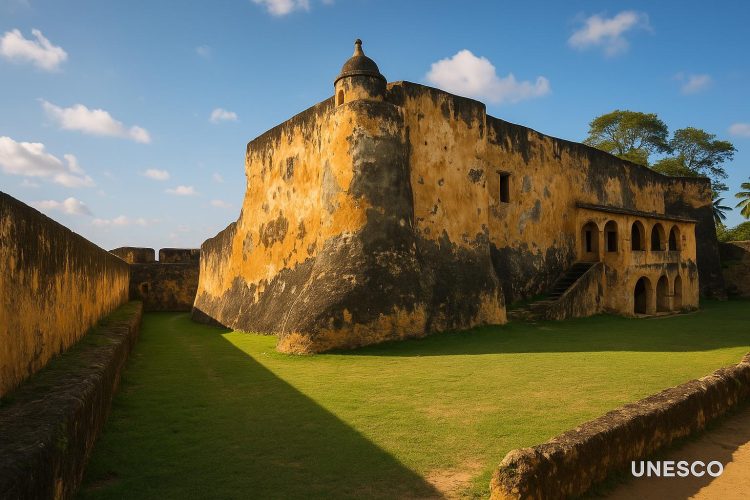
Introduction to Fort Jesus
Fort Jesus stands as an enduring testament to both architectural prowess and a rich historical tapestry, nestled on Mombasa Island along the vibrant coast of Kenya. It uniquely represents centuries of conflict, cultural exchange, and colonial ambition. Constructed by the Portuguese between 1593 and 1596, and designed by the renowned Italian architect Giovanni Battista Cairati, the fortification’s primary purpose was to protect the lucrative trade routes to India and establish Portuguese dominance over the East African coast. This strategic fort is recognized worldwide for its historical and cultural significance, underscored by its designation as a UNESCO World Heritage Site in 2011.
Architectural Significance
The architectural design of Fort Jesus is a magnificent example of Renaissance military architecture. Cairati’s design incorporates a five-pointed star structure, a common choice for fortifications during that period. The star-shaped design was not mere aesthetic preference but a strategic necessity aimed at facilitating effective defense against naval attacks. The star configuration allowed for better positioning of cannons and artillery, giving defenders a structural advantage over their attackers.
Material and Construction
One of the defining characteristics of Fort Jesus is its construction primarily out of coral stone, a material that was abundant along the Kenyan coast. This choice of material was not only pragmatic due to its availability but also remarkable for its durability. The coral stone has not only endured the onslaught of centuries of violent weather and warfare but contributed to the fort’s distinctive appearance. The sophisticated construction techniques employed are evident in the massive walls that have stood the test of time, showcasing both the craftsmanship of the engineers and the practical nature of its design.
Historical Role and Influence
Fort Jesus has witnessed several pivotal events that shaped the history of the Swahili coast. Initially, it was a symbol of Portuguese military might and served as their stronghold. However, the fort’s significance transcended its initial purpose as, over time, it became central to various colonial power struggles. In a dramatic turn of events, it fell into the hands of the Omani Arabs in 1698, marking a transition that initiated a new era of influence in the region. This change not only shifted control but also led to a cultural and architectural amalgamation as different powers imposed their influence on the fort. The British were the last colonial masters, occupying the fort in the late 19th century. Each occupier left a distinctive mark on the structure, resulting in a complex tapestry reflecting various periods and influences of cultural exchange and conflict.
Cultural and Educational Impact
Today, Fort Jesus offers immense cultural and educational value. The fort operates as a museum, inviting thousands of visitors each year to traverse its historic grounds. It provides a unique opportunity to explore well-preserved structures, view an impressive array of historical artifacts, and gain insight into the centuries of interactions between diverse civilizations. These interactions have enriched the cultural heritage of Mombasa and greatly influence the diverse traditions seen in the coastal regions today. By shedding light on this exchange, Fort Jesus plays an essential role in educating the public about the region’s storied past and the broader interactions between East and West.
Preservation Efforts
Efforts to preserve Fort Jesus for future generations are critical and ongoing. Its status as a UNESCO World Heritage Site highlights its importance on a global scale and emphasizes the need for robust conservation strategies. This international recognition has facilitated partnerships and collaborations between local and international stakeholders, allowing for comprehensive measures to maintain the fort’s structural and historical integrity. Preservation efforts focus not only on sustaining the physical structure but also on ensuring that its historical narrative continues to be shared with and appreciated by audiences worldwide.
Exploring Fort Jesus
For those visiting Fort Jesus, each step through its storied halls offers a journey back in time. The intricate design and historical significance are manifest in the preserved cannons and the harmonious blend of architectural styles. Engaging with the exhibits provides visitors with insights into the strategic significance of the fort and the broader historical context of Indian Ocean trade and colonial interactions. Each island dimension of the structure tells a part of the larger narrative of human history, making Fort Jesus a not-to-be-missed destination.
To learn more about Fort Jesus and its remarkable history, additional resources can be accessed through the official UNESCO World Heritage Site page, offering a detailed view of its historical and cultural significance. This exploration not only deepens one’s understanding of the fort but also enriches appreciation for the interconnected narrative of global history.